

Article by TRAK Pilot Caleb McIntyre, Vancouver Island, Canada
Cover photo by James Appleton | Rat Race

Before I left on my last multi-week TRAK expedition in Nicaragua, I had a tough choice to make:
Euro, Greenland, or both?
If you're already confused about what I'm talking about, don't fear. This is not a lesson about geopolitics. It's about choosing the right paddle!
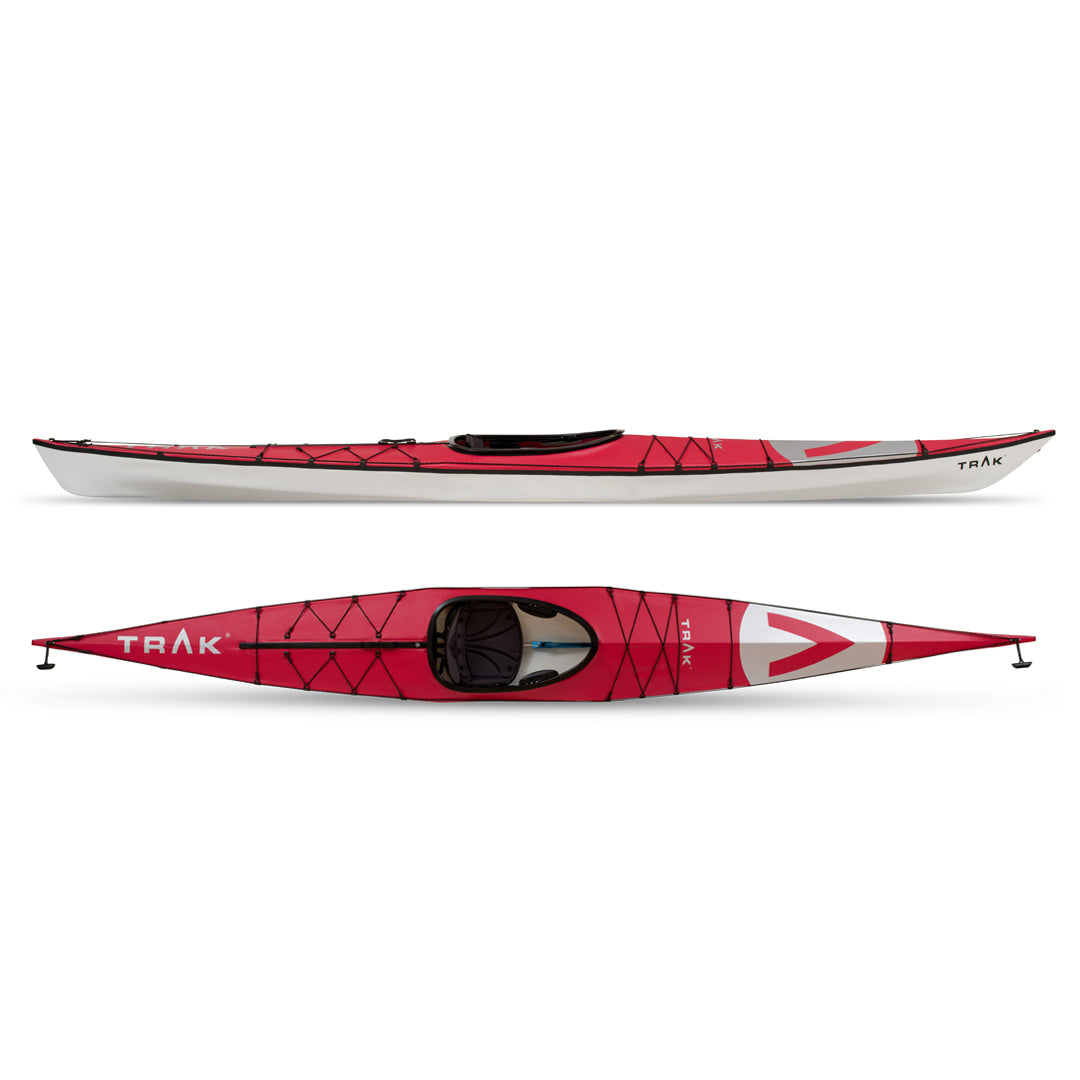
 Above: riding swell on Lago Colcibolca, an inland sea where waves stack up with tight periods. This is my Limited Edition TRAK 2.0 Vitality Series, which I prefer in Fuschia.
For those who need a refresher...
"Euro blades" are the most common types of paddles seen today. Just as you'd compare sprinting to jogging, different Euro-style paddles are designed for different intensities of paddling.
Whitewater-specific paddles tend to have a wide, round blades for short bursts of power in rough water.
Meanwhile, sea kayak touring blades tend to be slightly narrower, with less surface area on the 'active face' to favour long hauls in a broad range of conditions.
All Euro blades generally share one thing in common: wide, concave blades.

Above: Canadian Olympian Haley Daniels grew up competing in whitewater paddling, hence her preference for Euro style blades like the four-piece Quadra by Nimbus, which offers power and quick acceleration in a range of conditions. (Credit: Cody Shimizu)
Then, there are "Greenland" paddles...
These skinny-looking symmetrical blades harken back to the original sea kayak paddles, designed and perfected by Inuit peoples of the Arctic. Traditionally carved from driftwood from distant shores, these paddles feature long, narrow, convex blades that slice and pry through the water with near silence.

Above: TRAK's Chief Paddling Officer, Caleb McIntyre, paddled across Lago Cocibolca - the largest lake in Central America - using the feather light Solstice King Greenland paddle. (Credit: James Appleton | Rat Race)
Due to their slightly rounded, double-sided convex shape, Greenland paddles tend to naturally find their ideal angle in the water. This allows the paddler to relax their grip while reducing strain on shoulders, wrists, and fingers. Greenland paddles are generally designed for 'low angle' paddling, with hands moving side-to-side, rarely coming above chest height.
Many people assume that Greenland paddles offer less power than Euro blades. While this may be true for quick burst of acceleration, Greenland paddles easily maintains top hull speeds with efficiency and lower impact. As shared by international Greenland kayak instructor Robert Nissenbaum, The Art of Greenland Style Paddling involves "Precision, Power, Efficiency, & Grace."
Finding the 'right paddle' requires experimentation.

When it eventually came time to choose what paddle to bring with me to Nicaragua, I couldn't make up my mind.
So I ended up packing both a Euro AND and Greenland paddle in my bag: a Quadra Euro paddle by Nimbus, and a carbon fibre Solstice King Greenland paddle. Both of these paddles are ultralight and designed to break down into three or more pieces for easy storage within the TRAK rolling travel bag, so no compromises needed.
I went back and forth for a couple of days, trying to decide which paddle I liked most.
But by the middle of day three, the choice for me was clear.
Honestly, my Greenland paddle just felt better: easier, quieter, more elegant. My overall effort felt lower, my focus on grip was looser, and my enjoyment in long-distance paddling was higher.
Even though the rest of my teammates were using Euro blades, I didn't have to work any harder to keep up with them when using my Greenland blade; in fact, I often led the pack on long stretches. And, even when my mates were taping up their hands for more 30km+ days in the tropics, I was showing off no blisters, no shoulder pain, and no wrist issues.

Above: my human-powered expedition across Nicaragua with Rat Race Adventures involved a fleet of TRAK kayaks flown in from two hemispheres. Learn more about flying with a TRAK kayak here.
To me, this was all the proof I needed.
Thousands of years since the first kayak/qajaq was created, Greenland-style paddles are still here for a reason! In my experience as a sea kayak guide and instructor, this ancient design is still the best for going far - day after day - without putting excessive strain on my body and mind.
I ended up giving away my Quadra Euro paddle to Rick Morales, a friend from Panama who came with a Euro paddle that was actually designed for pack rafting. Those massive blades were powerful for sprints, but I could tell from Rick's posture that it was wearing him down on the longer crossings. Making the switch to a proper touring paddle probably saved him a lot of pain - so I'm glad I brought it along!
If you want to chat more about the pros and cons of different paddles, feel free to give us a call or book time with a TRAK paddler, here.
See you on the water.
- Caleb





Partager: