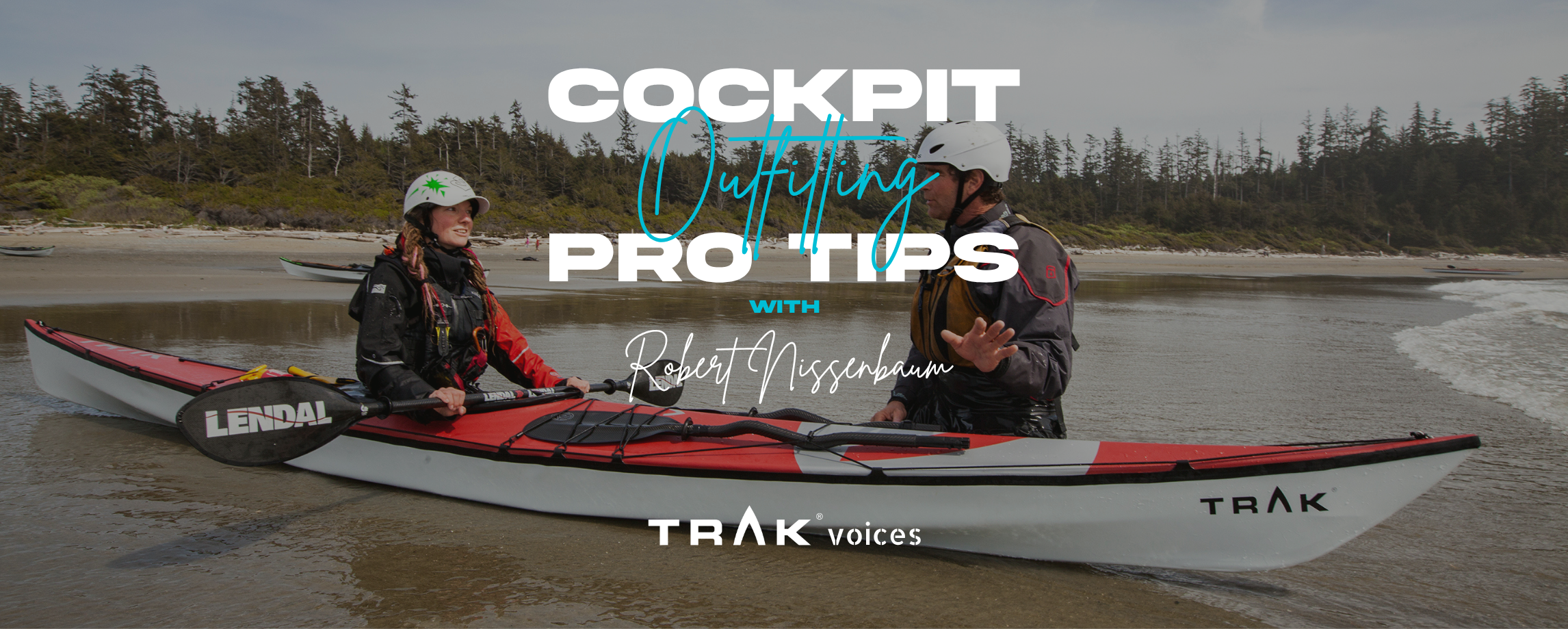
Article by Robert Nissenbaum
ACA State Director for WA, USA
As good as any kayak is, it's how well it fits you - your connection to the kayak - that makes it exceptional.
We often hear that the paddle doesn't roll a kayak, we do. The same applies to turning the kayak. We, the paddler, are directly connected to the kayak and it's our body movement which provides the control.
The better the fit, the better the control, and therefore, the better the performance.
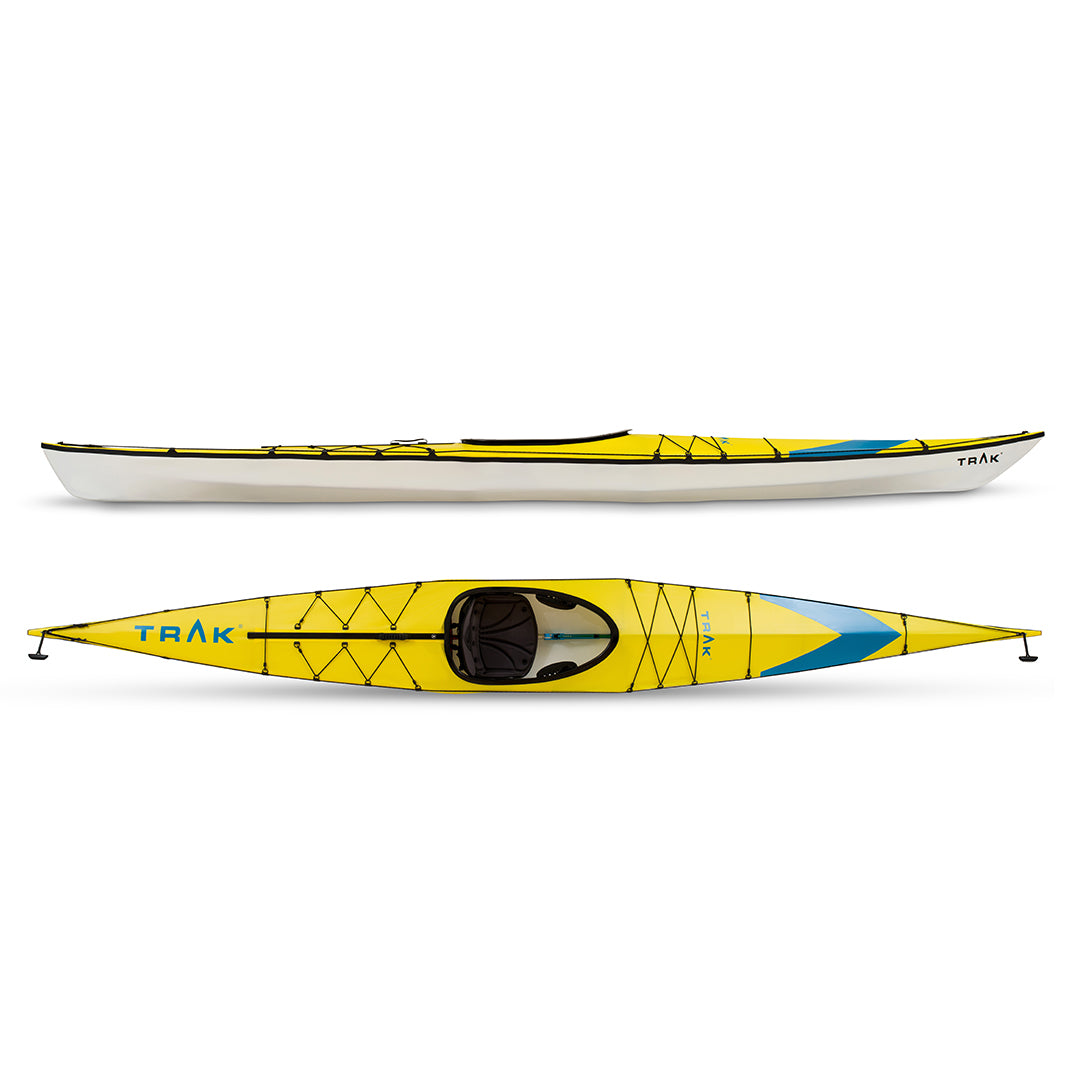
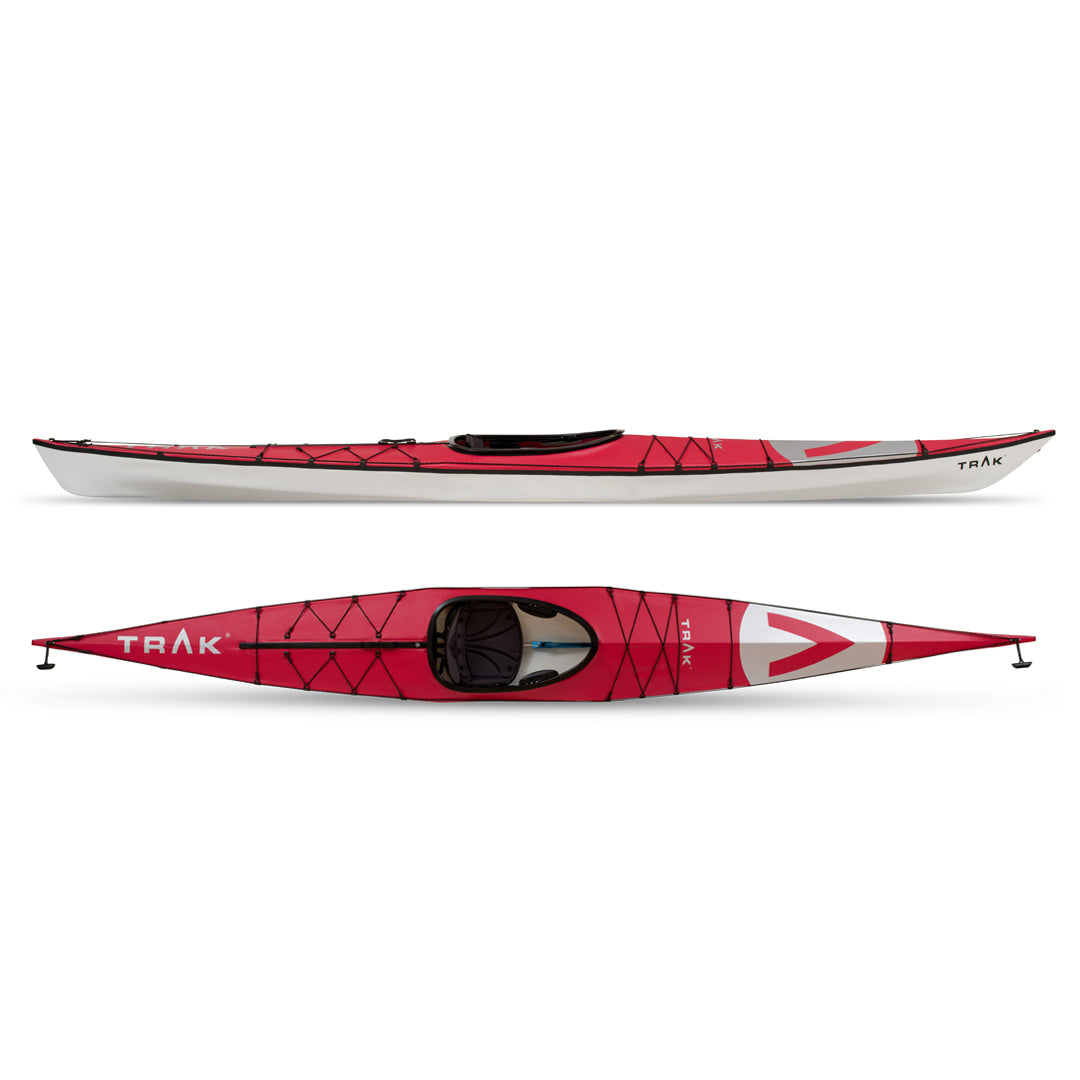
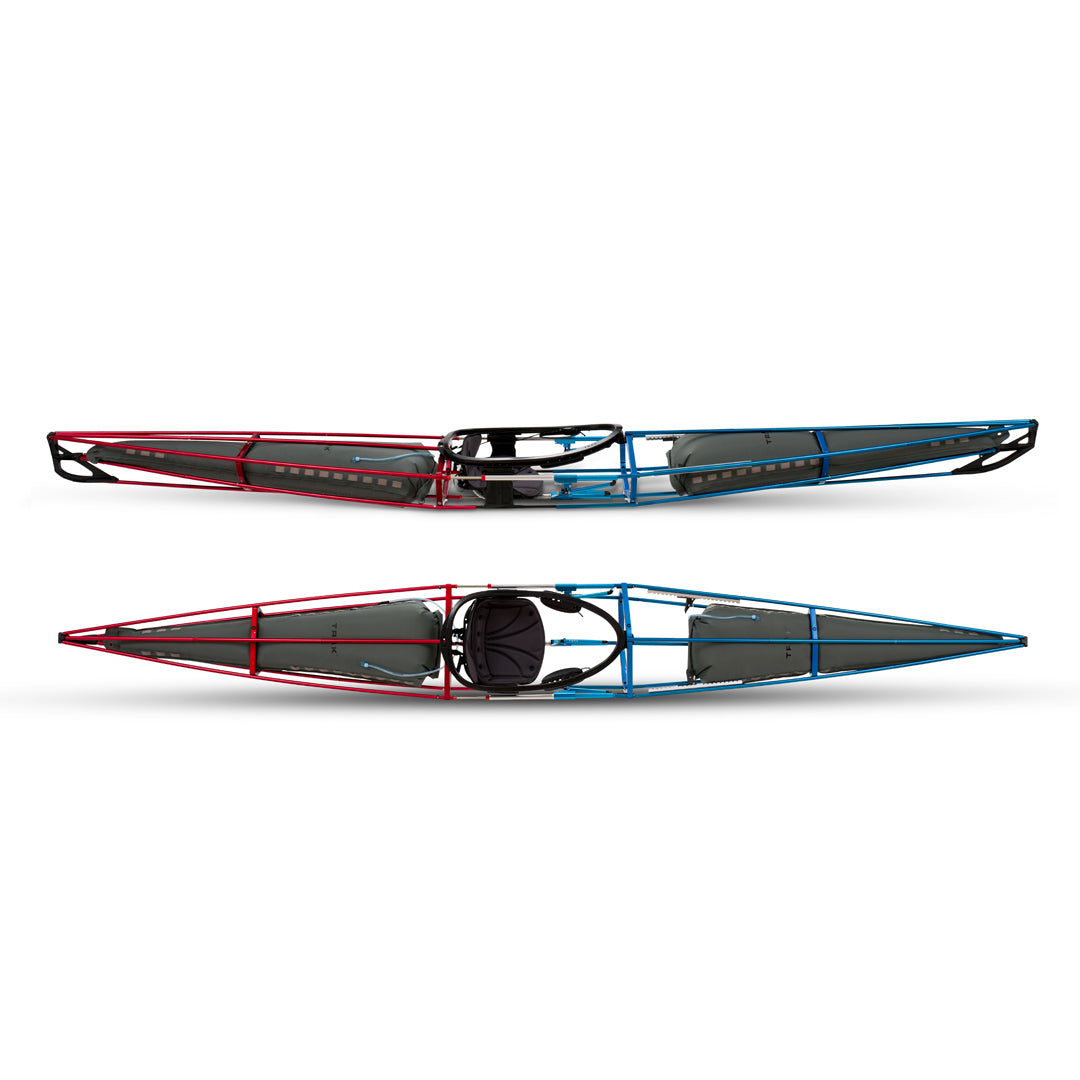
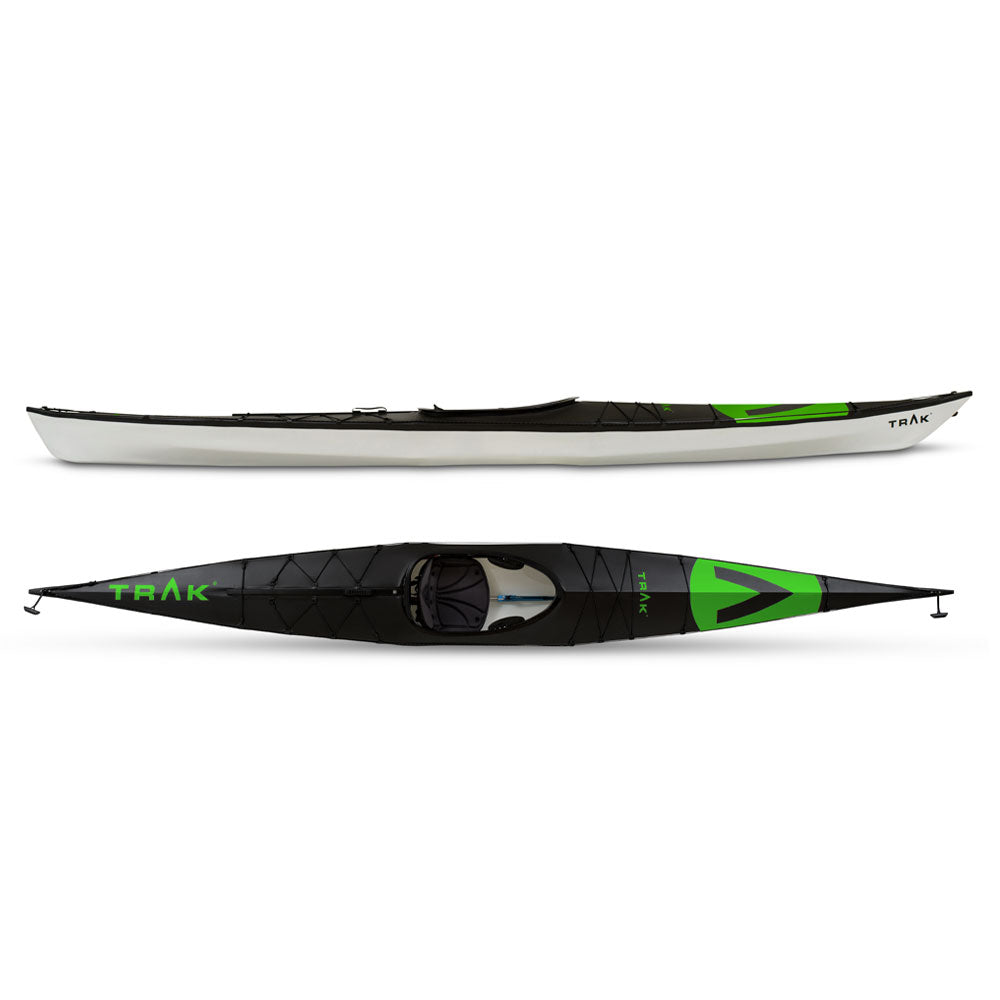
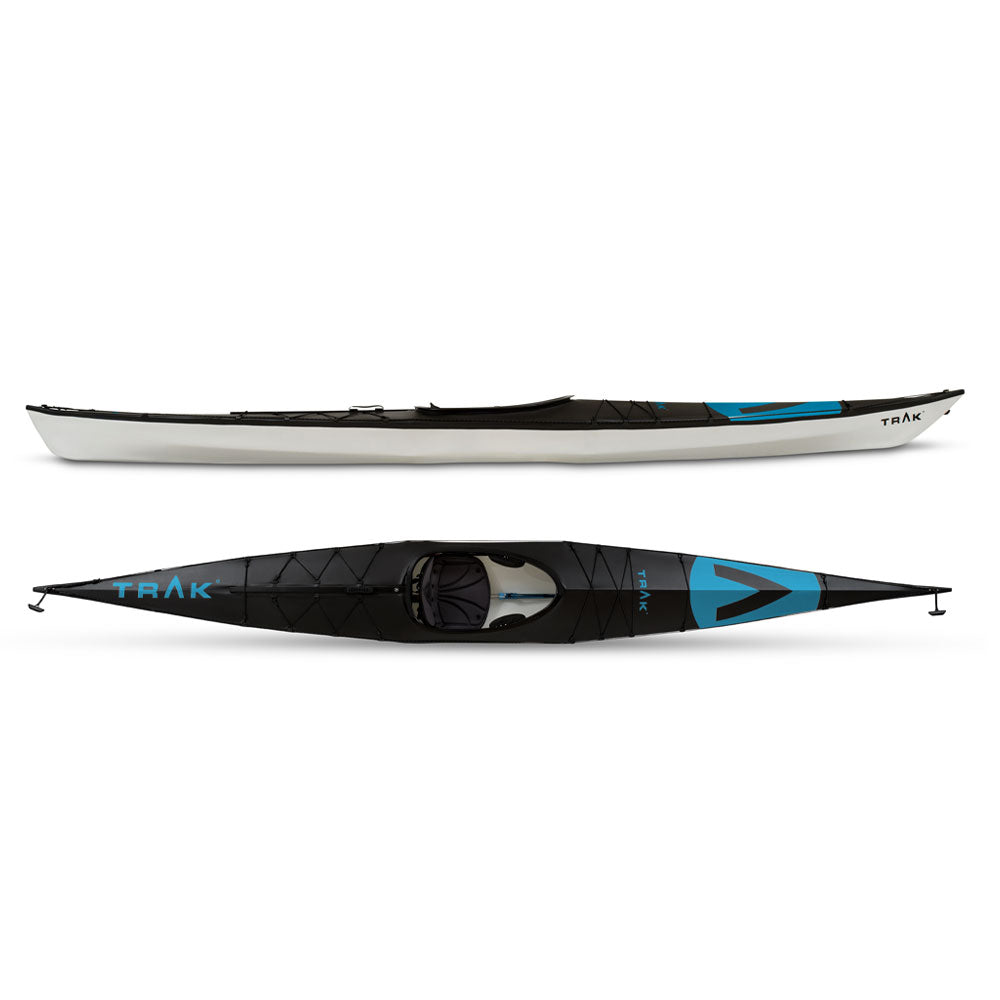
The TRAK 2.0 is a great kayak out of the bag. Adding the right outfitting will unlock more of its potential.
Above: The TRAK 2.0 with optional large thigh braces and adjustable hip pads, often sold as a bundle.
TRAK's optional larger thigh braces allow for better contact for rolling and bracing with a larger contact area and a 'hook' (similar to whitewater kayaks) to help bring the kayak up or around. If you are narrower person and need more connection, or are looking to get a bit more out of your rolls or rough water play, these are worth the investment.
The fact TRAK offers this as an option speaks volumes to their commitment to build truly capable sea kayak for touring to rough water play and everything in between.
You can see the coverage in the first picture with the standard thigh braces. They are comfortable and well designed for touring. In the second picture, you can see how much more of my thighs are covered and how the braces wrap or hook around me:
 Above: Standard Adjustable Thigh Braces, included with the TRAK kayak
 Above: Large Adjustable Thigh Braces, optional accessory for the TRAK
Custom Fits Using Minicell Foam
You'll notice my left leg is tucked much further under and pushed wider under the thigh brace. The reason for that is the addition of a minicell foam block on the outside of my leg wedged into the frame. That lateral block provides a better connection to the kayak and allows me to use my legs to push the bow around in the direction I am turning. I am physically driving the kayak where I want it to go.
The other benefit of the lateral blocks is your legs being straighter. We normally sit in the frog-legged position, not because that is best, but because that is how we NEED to sit to have any control over the kayak. The problem with sitting frog-legged? It can hinder your rotation affecting strokes and rolling. Part of that is body mechanics (you cannot fully rotate if you are too crunched up) and part of that is to hold the position we bring our foot braces closer. That closer position limits our ability to extend our legs enough to get full rotation. The lateral blocks are better for body position and allow for foot braces to be pushed more toward the bow - both leading to more available rotation.
 Above - inside of the TRAK cockpit, with no additional padding (usually you would rotate the jacks down and out of the way when paddling)
 Above - inside of the TRAK cockpit with custom 3" thick foam block addition, wedged under the jack.
Above: another view of the custom 3" thick foam block
You can see the difference in connection inside the kayak.
Above: without the blocks - there is quite a bit of space between my leg and the hull
Above: with the blocks - I am well fitted without being tight. I still have full range of motion.
You can also see how adding the lateral block results in more contact with the larger thigh braces to get more out of using them as well:

Above:
without the foam blocks, minimal contact with 'the hook' of the braces.
Above: with the foam blocks, maximum contact with 'the hook' of the braces.
The final outfitting component is the hip pads.
This is another place TRAK has looked to make the 2.0 a better fit for paddlers. With three possible thicknesses, you can get a good fit that still allows for hip rotation while keeping you in the centre of the seat when on edge and rolling - especially important for those with narrow hips.


To learn more about cockpit outfitting and create the perfect fit for your TRAK cockpit, join us for TRAK's 20th Anniversary Sea Kayak Symposium, Sept 18-21, 2026.
I'll be there as an instructor and TRAK Pilot Ambassador - with lots of extra foam!
See you on the water.
Robert

About the Author
Robert is a Coastal sea kayak and Greenland paddling instructor and Gearlab Outdoors Pro Athlete based in Seattle, WA.
His core focus falls into two areas - working with paddlers at all levels to help them grow their skills, confidence, and personal passion for the sport and his passion for teaching Greenland paddling skills - using the paddle effectively as well as rolling.
Robert holds the ACA L3 Coastal Kayak Instructor with the Coastal Kayak Trip Leader endorsement, Rolling instructor endorsement, and Advanced Communications instructor endorsement as well as the Paddle UK Sea Kayak award.







Partager: